
What are "Skin Boosters"?


Originally introduced in 2015 to describe intradermal microinjections of non-cross-linked HA, “skin boosters” were initially intended to improve hydration, elasticity, and texture through direct dermal deposition—bypassing the stratum corneum (SC) to provide more predictable local dermal exposure.
Recent comparative reviews reflect the diversification of injectable skin booster practice to include both HA-based and polynucleotide/PDRN-based products. The terminology was later extended to topical serums and gels containing bioactives associated with injectable products.
Today, “topical skin booster” commonly refers to HA-based serums using low-molecular-weight HA for improved penetration, as well as newer formulations incorporating growth factors, Exosomes, PDRN, or polymer–HA hybrids designed for topical or microneedle-assisted delivery.
In Korea, where the skin booster concept has substantial commercial visibility, the term is applied across heterogeneous topical products. Because “skin booster” is a commercial and clinical descriptor rather than a standardised pharmacologic category, the evidentiary burden should be determined by product composition, route of administration, intended use, and the specific claim being made. Moreover, no universally accepted definition exists for topical products marketed under the broader skin booster concept, and the category is often characterised by commercial positioning rather than clearly defined pharmacologic criteria.
At present, the term “topical skin booster” is applied variably to products spanning post-procedure recovery serums, daily humectant formulations, and agents intended for device-assisted transcutaneous delivery.
From a strict clinical and pharmacologic standpoint, the scientific basis for labeling these topical agents as skin boosters is not easily justified. The key advantage of skin-boosting or biorevitalizing injectables is their ability to bypass the epidermis, the primary barrier that prevents transdermal delivery of high-molecular-weight biologics. However, topical delivery of these macromolecules remains constrained by the skin barrier. Passive penetration of high-molecular-weight HA is markedly restricted and molecular-weight dependent, while evidence that native PDRN crosses intact human SC at therapeutically relevant levels remains sparse.
Injectable particulate biostimulators such as Poly-L-lactic Acid (PLLA) and Polycaprolactone (PCL) derive part of their neocollagenic effect from tissue-level controlled foreign-body responses after implantation. This implantation-dependent mechanism should not be assumed for topically applied polymer particles that have not been demonstrated to reach viable tissue.
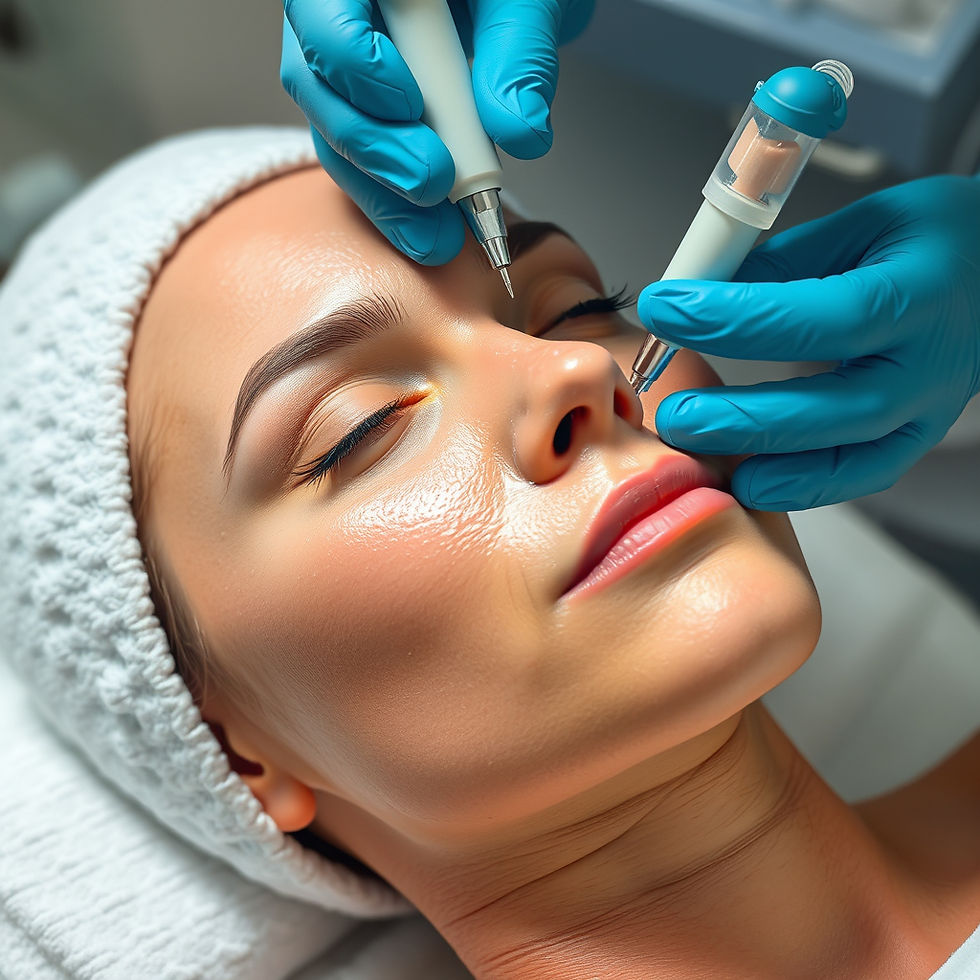
Mechanical disruption of the SC using microneedling and related microneedle platforms is a well-established technique for creating transient microchannels that bypass the SC and facilitate transcutaneous transport of topically applied agents. Microchannel formation, however, establishes a potential transport pathway rather than analyte-specific delivery to a defined tissue compartment; increased permeability or tracer transport should therefore be distinguished from tissue deposition, target engagement, and clinical efficacy. Nominal microneedle length influences the skin compartment accessed but actual insertion depth and channel behavior vary with device mechanics, anatomical site, skin thickness, needle geometry, and insertion technique.
Laser-assisted drug delivery (LADD) has emerged as a well-established therapeutic platform in dermatology, leveraging controlled fractional laser-induced disruption of the skin barrier to enhance the cutaneous and transdermal delivery of topically applied agents. These vertically oriented, water-filled microchannels provide a transient pathway for topical agents to bypass the SC, particularly facilitating the delivery of hydrophilic molecules that otherwise penetrate intact skin poorly. Furthermore, the peripheral zone of thermal coagulation surrounding each microscopic ablation column may serve as a transient drug reservoir, modulating the retention and subsequent diffusion of topically applied therapeutics.
Radiofrequency microneedling (RF) has emerged as a distinct and mechanistically unique modality within the paradigm of device-assisted drug delivery. Unlike standard mechanical microneedling or ablative fractional laser, RF microneedling induces two simultaneous yet distinct tissue events that govern drug permeation. The physical penetration of the needles generates mechanical microchannels that bypass the SC, functioning identically to traditional microneedling to facilitate the initial entry of topically applied agents.
Future development of topical skin boosters may move from empirically repurposed cosmeceuticals toward more integrated formulation–device systems, in which molecular size, hydrophilicity, viscosity, concentration, stability, and excipient composition are optimized for the transport environment created by a specific delivery platform.
Ablative fractional laser generates open microchannels whose depth and morphology interact with drug solubility, molecular size, and tissue-binding properties to determine biodistribution, whereas microneedle-based systems and RF microneedling create distinct mechanical and thermal transport environments whose formulation requirements remain incompletely characterised. Cold atmospheric plasmare presents a mechanistically different approach, transiently modifying SC lipid chemistry and permeability and showing enhanced transport for selected hydrophilic analytes under specific experimental conditions.
These device-specific requirements may motivate dedicated post-procedure formulations with analyte- and platform-specific pharmacokinetic characterisation (how the body affects a substance or medication), reducing empirical cross-platform use of formulations that have not been specifically evaluated for a given device and making direct comparative pharmacokinetic studies increasingly important. In parallel, regulatory-science discussions of active-loaded microneedle dosage forms provide a precedent for treating the formulation and delivery architecture as an integrated product-development problem, with implications for next-generation topical skin booster product development.
Topical skin boosters represent an evolving approach to skin rejuvenation, but their clinical adoption has outpaced direct characterisation of cutaneous exposure, particularly for macromolecular actives. Because passive permeation of many large, hydrophilic macromolecular actives across the intact SC is highly constrained under conventional topical conditions, meaningful exposure within deeper cutaneous compartments generally requires an effective penetration-enhancing strategy, such as physical barrier bypass, transient barrier modulation, or appropriately engineered carrier systems.
Future development should therefore move beyond the nonspecific “regenerative serum” paradigm toward rational formulation–device integration and delivery systems designed around the physicochemical properties and intended tissue targets of individual actives.
NOT MY OWN WORK. Taken from:
Rho, N.-K.; Jeon, H.-D.; Park, H.-J. Topical Skin Boosters in Aesthetic Practice: Pharmacokinetic Challenges, Delivery Platforms, Evidence Gaps, and Future Directions. Cosmetics 2026, 13, 248. https://doi.org/10.3390/cosmetics13050248
Copyright © 2026 by the authors.
The above is taken from an open-access/ free-access article distributed under the terms of the Creative Commons Attribution License (CC BY). The use, distribution or reproduction in other forums is permitted, provided the original author(s) and the copyright owner(s) are credited and that the original publication is cited, in accordance with accepted academic practice. No use, distribution or reproduction is permitted which does not comply with these terms.


Comments