
More About Microneedling


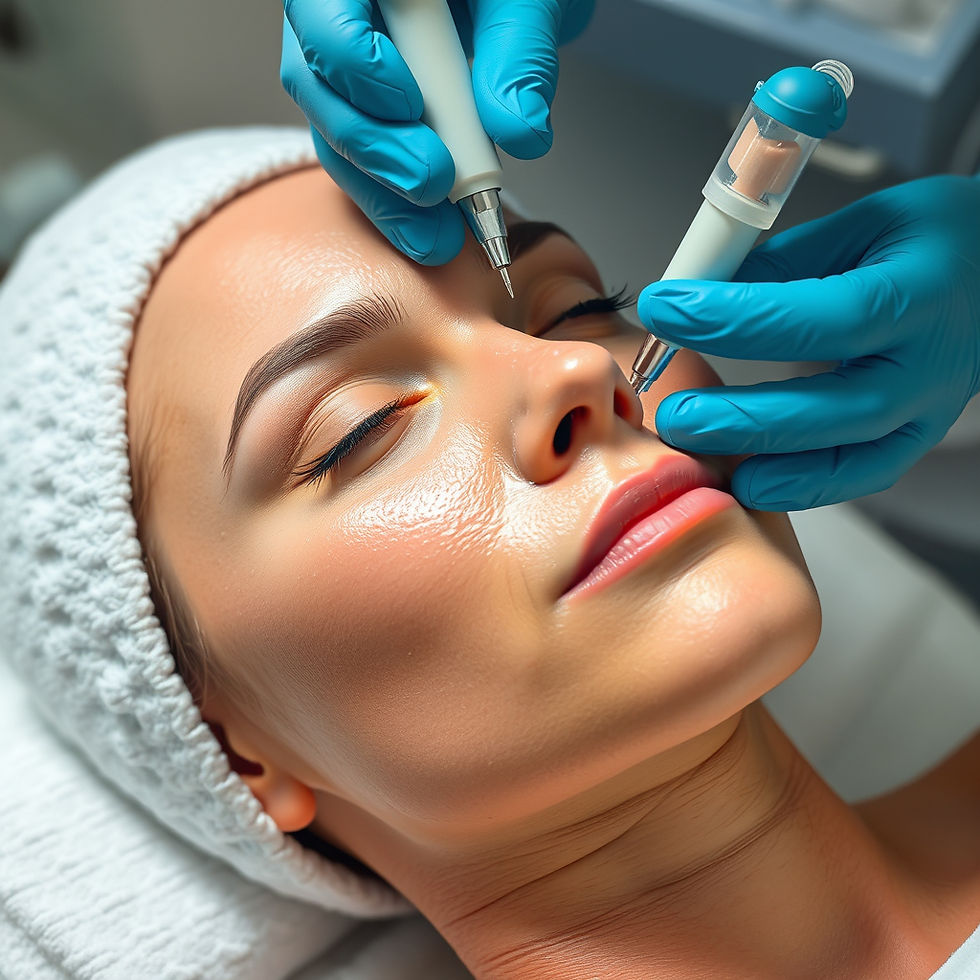
The skin’s outermost layer, the stratum corneum, serves as a major barrier to the penetration of most cosmetic and dermatologic actives, particularly large or hydrophilic molecules. Microneedles (MNs) overcome this limitation by creating microscale channels that temporarily disrupt the barrier, allowing active ingredients to diffuse into the viable epidermis and superficial dermis without causing pain or bleeding.
This has been demonstrated in a clinical imaging study where fluorescently labeled compounds delivered via dissolving microneedles showed significantly enhanced permeation into the epidermal and dermal layers compared to topical application alone.
A bioinspired double-layered adhesive microneedle (MN) patch was developed using a swellable mussel adhesive protein (MAP) shell and a non-swellable silk fibroin (SF) core to address the limitations of sutures and staples. The patch demonstrates strong tissue penetration, adhesion, and swelling-mediated sealing, achieving ex vivo wound sealing comparable to sutures. It performs effectively on wet and dynamic tissues, showing promise for vascular, gastrointestinal, and transdermal wound healing applications.
Once applied, these microchannels enhance the permeability of compounds such as peptides, retinoids, and vitamins, enabling faster and deeper delivery compared to topical creams or serums. The micro-injury produced by insertion is shallow and transient; skin integrity typically restores within hours, ensuring both safety and reversibility as demonstrated in a controlled permeation study where microneedle-created microchannels facilitated markedly greater transdermal flux of cosmetic actives compared with intact skin, this study evaluated microneedle (MN) enhancement of peptide skin penetration using fluorescence imaging and confocal microscopy. Peptides of varying chain lengths (3–5 amino acids) were tested on excised human skin for 1 and 24 hours. MNs significantly increased peptide delivery, showing a 2- to 22-fold improvement over passive diffusion. These findings demonstrate, for the first time, effective microneedle-assisted delivery of peptides.
Despite the remarkable progress and commercial success of microneedle-based cosmetic systems, several scientific, technical, and regulatory challenges remain that must be addressed to fully realise their potential in aesthetic dermatology. One of the primary limitations lies in the balance between mechanical strength and biocompatibility—biodegradable polymers such as hyaluronic acid or polyvinylpyrrolidone often lack sufficient rigidity for consistent skin penetration, while stronger materials like metals or ceramics may cause irritation or leave residues. In a study a novel PVP-based microneedle patch coated with gold or silver bioelectrodes was developed to combine high mechanical strength, biocompatibility, and controlled drug delivery. The metal-coated microneedles efficiently penetrated the skin and achieved up to 7.9-fold higher drug release under electrical stimulation and 5.3-fold under thermal conditions. These findings demonstrate the patch’s potential for advanced cosmetic and medical applications.
Achieving precise, reproducible microneedle insertion depth across diverse skin types and anatomical regions also remains difficult, influencing both delivery efficiency and consumer experience. Additionally, scale-up and mass manufacturing of uniform, sterile microneedle patches pose economic and technical hurdles, particularly when incorporating heat- or solvent-sensitive cosmetic actives such as peptides, vitamins, and botanical extracts.
Stability and oxidation of encapsulated compounds during storage, especially under varying humidity and temperature, can limit shelf life and efficacy. Furthermore, the lack of global standardisation for cosmetic microneedle testing, safety evaluation, and labeling complicates regulatory approval and international trade, necessitating unified protocols for quality control and dermal tolerability. From a clinical standpoint, there remains a need for long-term studies assessing cumulative effects, repeated use safety, and comparative efficacy with established dermatologic treatments.
Consumer education also plays a crucial role, as improper application or reuse could lead to contamination or reduced performance. Looking ahead, the future of microneedle cosmetics is expected to move toward smart, personalised, and sustainable systems, integrating bio-sensing, AI-guided dosing, and eco-friendly biopolymers for individualised skin therapy. Vitamin C microneedles (VIT C MNs) were developed using biodegradable polymers with EDTA and sodium metabisulfite to enhance stability and dermal delivery. The MNs showed strong mechanical properties, rapid dissolution (<30 min), and high VIT C recovery (88–90%). The stabilised formulation remained effective for two months, offering a safe and efficient system for anti-aging skin therapy.
Advancements in 4D printing, stimuli-responsive materials, and nanotechnology will likely enable adaptive microneedles capable of real-time monitoring and targeted delivery based on skin feedback. Moreover, coupling microneedles with digital skincare platforms and wearable devices will transform traditional skincare into a data-driven, interactive experience. Ultimately, overcoming current limitations through interdisciplinary innovation and harmonised regulation will position microneedle-based systems as the next-generation standard for effective, safe, and intelligent cosmetic dermatology.
Microneedle-based cosmetic delivery systems represent a transformative advancement in modern dermatologic science, bridging the gap between traditional topical formulations and clinical aesthetic procedures. By offering minimally invasive, precise, and controlled transdermal delivery, microneedles enable enhanced penetration of bioactive ingredients such as peptides, vitamins, antioxidants, and hyaluronic acid into deeper skin layers, achieving results that were previously attainable only through invasive treatments. Over the past decade, extensive research and clinical evidence have validated their superior efficacy, safety, and user acceptability across multiple cosmetic applications, including anti-aging, skin brightening, acne management, hydration, and hair growth promotion.
The continuous evolution toward smart, stimuli-responsive, and nanocarrier-integrated microneedles further expands their versatility, enabling personalised and adaptive skincare approaches that respond dynamically to individual skin conditions. However, challenges related to large-scale production, material optimisation, long-term safety assessment, and global regulatory harmonisation must be addressed to ensure consistent quality and consumer confidence. As interdisciplinary collaborations among dermatologists, materials scientists, and cosmetic formulators intensify, microneedle technology is poised to redefine the future of skincare—transforming passive cosmetic application into an active, intelligent, and therapeutic dermal experience. With sustained innovation and responsible regulation, microneedle-based systems will undoubtedly become a cornerstone of next-generation aesthetic dermatology and personalised cosmetic care.
Not my own work. Taken from:
Karthikha Vijayakumar, Nandhini Jayaprakash, Elizabethrani Edwin,
Microneedle-Based Cosmetic Delivery Systems: Advances, Applications, and Future Perspectives in Skin Care and Aesthetic Dermatology, Journal of Dermatologic Science and Cosmetic Technology, 2026, 100166, ISSN 2950-306X, https://doi.org/10.1016/j.jdsct.2026.100166.
(https://www.sciencedirect.com/science/article/pii/S2950306X2600021X)
Copyright © 2026 by the authors.
The above is taken from an open-access article distributed under the terms of the Creative Commons Attribution License (CC BY). The use, distribution or reproduction in other forums is permitted, provided the original author(s) and the copyright owner(s) are credited and that the original publication is cited, in accordance with accepted academic practice. No use, distribution or reproduction is permitted which does not comply with these terms.


Comments